
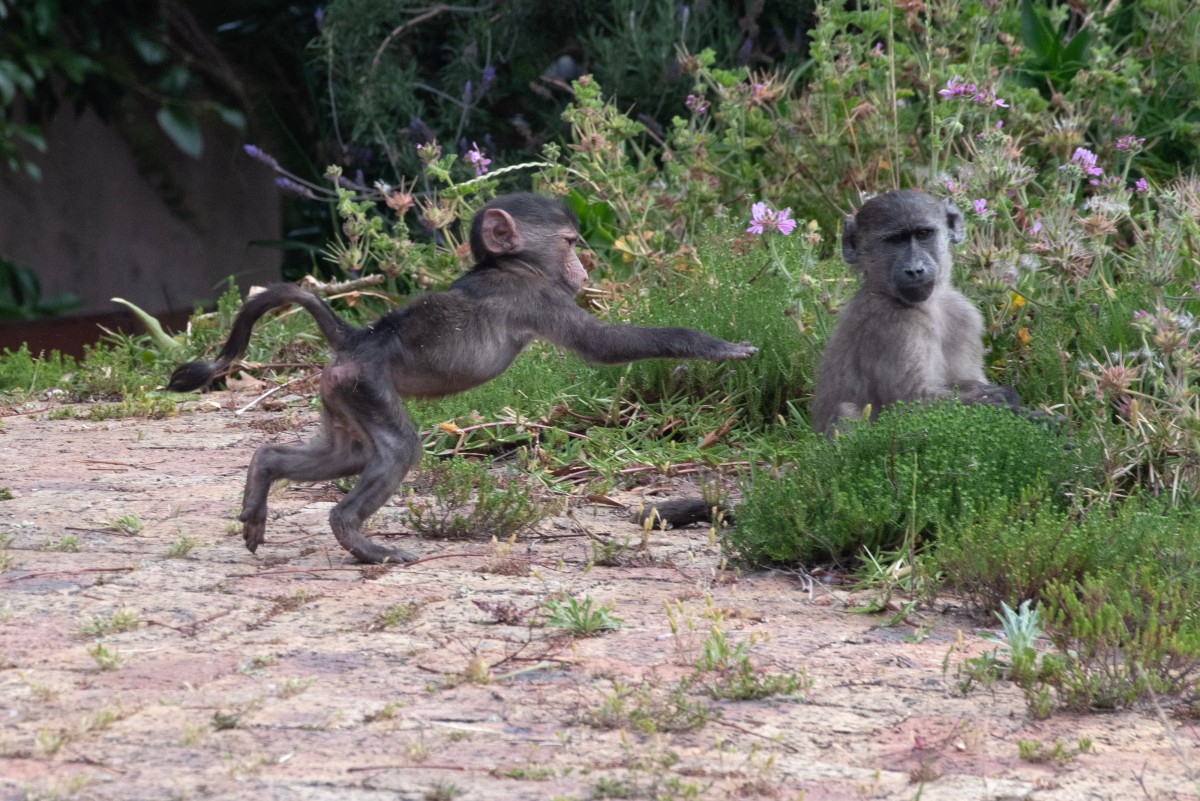
Study Finds Young Baboons Show Jealousy Similar to Human Children
Researchers have discovered that young baboons compete for their mother’s attention, showing jealousy similar to that of human children. This finding was shared by scientists on Wednesday, highlighting that sibling rivalry is not just a human issue.
Axelle Delaunay, an evolutionary biologist from the University of Turku in Finland, led the study. She noted that jealousy is a strong emotion in humans but has been less explored in primates due to its complexity. Traditionally, it was believed that baboon siblings did not compete for their mother’s resources because they are usually born one at a time and are of different ages.
To investigate this, the research team observed two groups of wild chacma baboons in Namibia from August to December 2021. They focused on 16 families with a total of 49 young baboons. In baboon societies, females hold the power, and males leave the group after reaching puberty. The mothers and their infants share a close bond, often grooming each other.
The scientists closely watched how baboon mothers interacted with their children, especially during grooming sessions. They noted when another infant would interrupt this grooming by displaying behaviors like biting, slapping, or crying out. The findings showed that young baboons were more likely to interrupt their mother when she was grooming a sibling compared to when she was simply resting.
The study, published in the Proceedings of the Royal Society B: Biological Sciences, revealed that jealousy among baboon siblings mirrors patterns seen in humans. However, the researchers found that these jealous displays did not lead to significant changes in the mothers’ behavior. Mothers only stopped grooming one child due to another’s outburst about one-fifth of the time, and they rarely redirected their attention to the jealous child.
[logo-slider]