UK Builds New Reservoirs to Address Ongoing Water Shortages
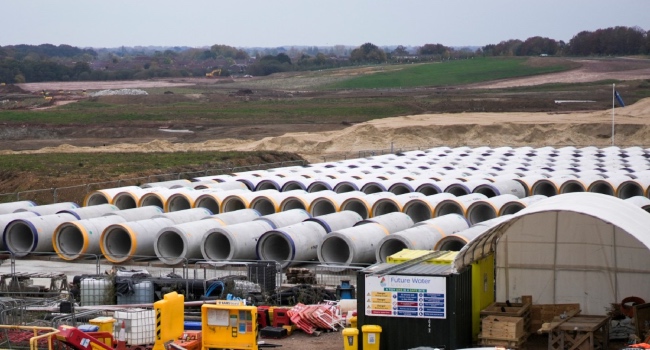
The UK is taking action to tackle ongoing water shortages by building a new reservoir, the first in over 30 years. The Havant Thicket Reservoir is being constructed near Portsmouth and is expected to cost around £800 million (about $1 billion). This project comes as the country faces challenges from a warmer and drier climate, which has led to record heat and ongoing drought conditions.
Climate scientist Hannah Cloke from Reading University highlighted the growing concerns about water security in the UK. She noted that the way the country stores water needs to improve, especially as extreme weather events become more common. As of mid-November, most of England was still experiencing drought, with existing reservoirs only 60% full, significantly below the usual levels for this time of year.
Bob Taylor, the chief executive of Portsmouth Water, emphasized that the issue is not just about the total amount of rainfall, but when it occurs. Winters are getting wetter while summers are becoming drier. The new reservoir will have the capacity to hold up to 8.7 billion litres of water, which will help secure supplies for many people in the region.
The UK government has approved plans for nine major reservoirs to be built by 2050, aiming to address the increasing demand for water due to population growth and industries that use large amounts of water. The Havant Thicket Reservoir is the only one currently under construction and is expected to be operational by 2032 or 2033.
Despite the positive outlook, there are concerns about the reliance on spring water and the local opposition to a planned wastewater recycling facility. Critics argue that the reservoir should only use spring water due to past issues with the water industry. Cloke warned that building reservoirs alone will not solve the water crisis, advocating for better water management practices and reduced consumption.
The Environment Agency agrees that improving water efficiency and reducing waste is crucial. They estimate that about 60% of the future water shortfall will need to be addressed through better usage and conservation efforts, alongside new water sources like recycling and desalination projects.
[logo-slider]