South Africa Releases Full Video of Nigerian Ambassador’s Speech After Protest
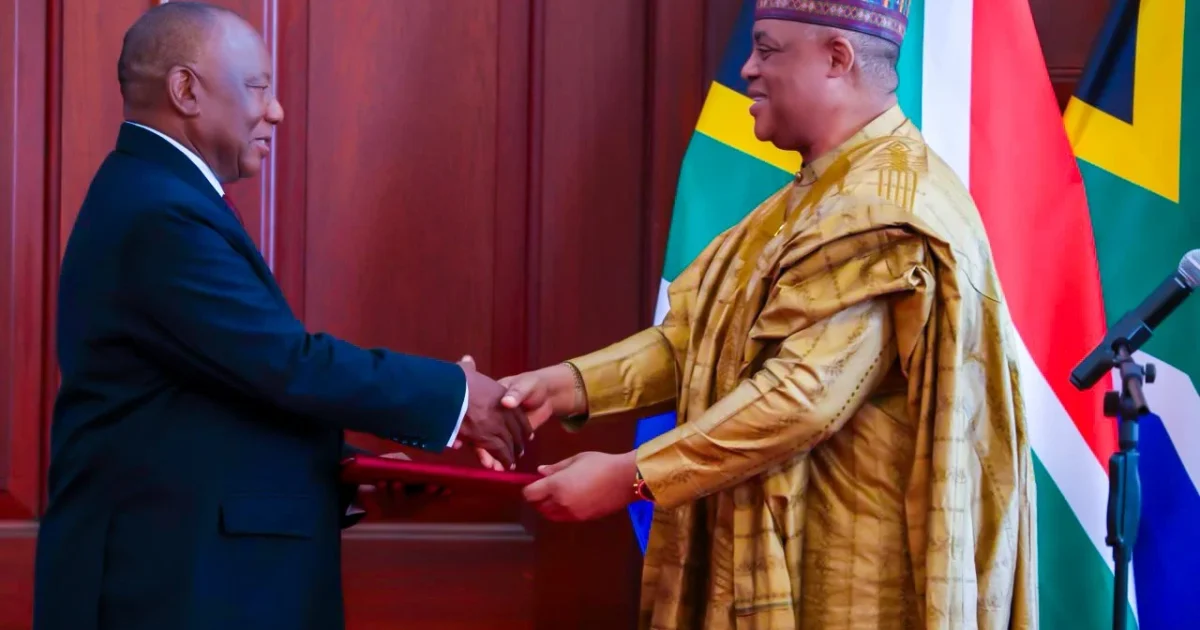
The South African government has released a full video of the ceremony where Femi Fani-Kayode was introduced as Nigeria’s Ambassador. This came just hours after Fani-Kayode protested that his speech was cut from the livestream of the event.
The video was uploaded to the South African Presidency’s YouTube page shortly after Fani-Kayode publicly expressed his concerns. He claimed that while the speeches of ambassadors from 14 other countries were broadcast, his was not. The livestream resumed only after he finished speaking.
In the newly released footage, Fani-Kayode spoke about strengthening the relationship between Nigeria and South Africa. He emphasized their long history of friendship and cooperation, recalling Nigeria’s support during South Africa’s struggle against apartheid.
“Nothing can come between the two of us. And part of my job here is to reset that relationship,” he said. He highlighted Nigeria’s role as South Africa’s largest trading partner in Africa and stressed the importance of working closely together.
Fani-Kayode also praised South Africa’s stance on international matters, including the Gaza conflict, and noted its involvement in the BRICS group of countries. He conveyed goodwill from Nigeria’s President Bola Tinubu to South African President Cyril Ramaphosa.
After the ceremony, Fani-Kayode confronted Ramaphosa about the livestream issue. The South African President responded by directing officials to address the situation, although it was too late to include Fani-Kayode’s speech in the original broadcast.
Fani-Kayode declined an interview request from the South African Broadcasting Corporation, citing disrespect towards the Nigerian delegation. He thanked Ramaphosa for his intervention but insisted that he would not accept any disrespect towards Nigeria.
[logo-slider]