US Army Destroys Toxic Explosives in Iowa Amid Safety Concerns
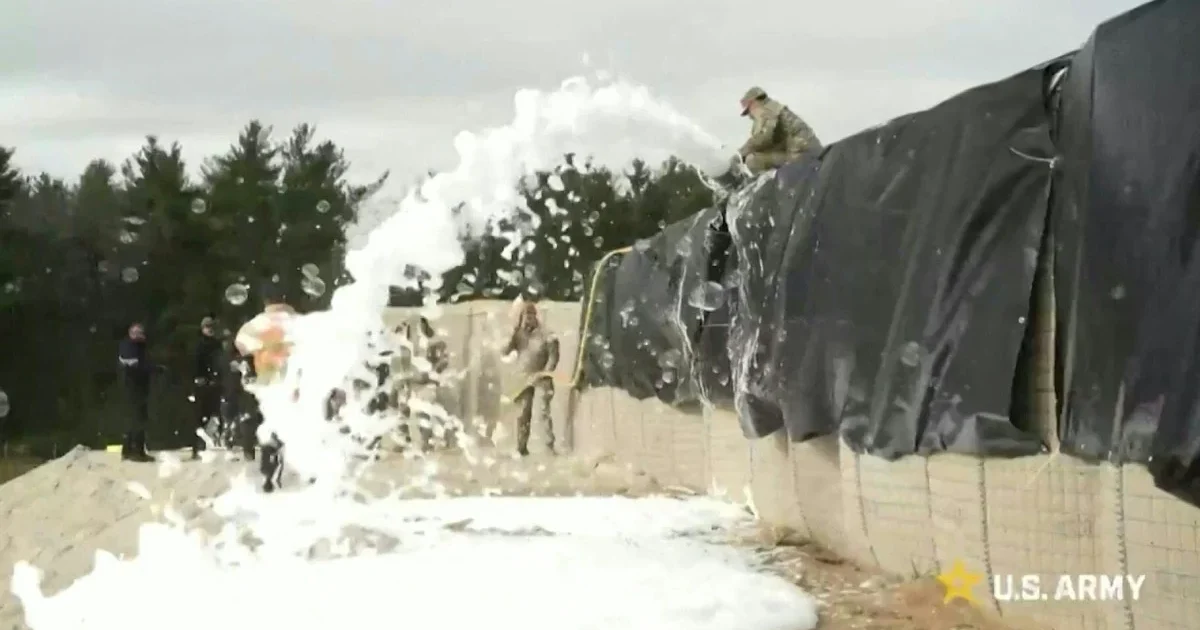
The US Army conducted a controlled explosion of toxic explosives in Middletown, Iowa, on Wednesday. This action was taken to eliminate about 10,000 pounds of unstable materials that posed a risk of accidental detonation.
Residents in the area were advised to evacuate due to concerns about possible lead contamination from the explosion. The materials, stored for over 15 years, included 68 drums of lead azide, which were deemed too dangerous to move.
Officials implemented extensive safety measures during the detonation. After the explosion, environmental authorities reported no airborne lead was detected in the region. Major General Eric Shirley stated that the operation was a success and minimized health risks to local communities.
The detonation was initially planned for November 20 but faced delays, including a pause ordered by former President Trump. After the explosion, Iowa’s incoming governor, Rob Sand, commended the experts for their efforts but criticized the chaotic lead-up to the event.
Colonel Aaron Teller, who oversaw the detonation, explained that previous disposal methods had resulted in significant lead particles remaining at the site. This time, protective measures were enhanced to contain any potential contamination.
Maps released by the Army indicated areas where residents might be exposed to lead dust and recommended that people, especially children under six, stay indoors with windows and doors closed.
The Federal Emergency Management Agency supported the evacuation of Middletown and nearby areas before the detonation took place.
[logo-slider]