
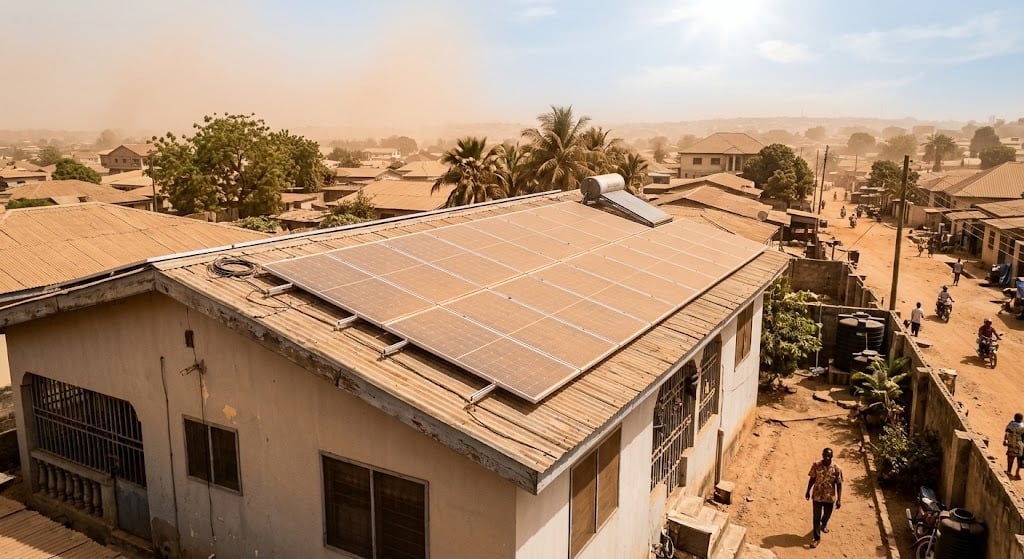
Understanding Factors That Lower Solar Panel Efficiency in Dry Seasons
Homeowners often believe that sunny days mean maximum solar power production. However, clear skies and intense sunlight do not always lead to the best energy output from solar panels, especially during the dry season.
Several factors can reduce the efficiency of solar panels during this time. These include excessive heat, dust accumulation, shorter sunlight hours, atmospheric haze, and issues with wiring and inverters.
Solar panels work by absorbing light rather than heat. When temperatures rise above 25°C (77°F), the efficiency of the panels decreases. Research shows that for every degree Celsius above this temperature, a solar panel can lose about 0.3% to 0.5% of its output. During heatwaves, panels can reach internal temperatures over 65°C, which can significantly lower their voltage output.
Dust and soot also pose a problem. The dry season brings dust, pollen, and smoke, which can accumulate on the panels. This layer of dirt can reduce energy production by 20% to 50% if not cleaned regularly. The dust blocks sunlight from reaching the solar cells, making the system less effective.
Additionally, the dry season often comes with shorter daylight hours and lower sun angles. This means that the sun is not as high in the sky, which can reduce the amount of direct sunlight hitting the panels. As a result, there are fewer hours for the panels to generate energy.
Atmospheric conditions, such as haze and airborne particles, can also scatter sunlight, further reducing the efficiency of solar panels. Even on bright days, these particles can lower the total sunlight that reaches the panels.
Lastly, high temperatures can affect the wiring and inverters of solar systems. As temperatures rise, electrical wires can lose energy, and inverters may overheat, leading to reduced power production. To maintain efficiency, homeowners are advised to clean their panels regularly, ensure good airflow beneath them, keep inverters cool, and have wiring inspected annually.
[logo-slider]